
俄英7年默契“归零”,英媒一句话透露深意,最大输家浮出水面,鲸探所,原创 俄英7年默契“归零”,英媒一句话透露深意,最大输家浮出水面 IT早报 0825:2026 胡润中国品牌榜发布;成都减灾所就预警偏差致歉;小米明确二手手机等产品不属三包范围;小米玄戒 O3、O100、D100 三款自研芯片发布...
第八号当铺
Director Wen Muye speaks on latest anti-war movie_我的网站

A | AI摘要 2026年海峡两岸书院文化交流活动在厦启动,130余名两岸代表参加。现场发布三条研学线路及文创产品,展演南音、高甲戏。活动聚焦闽南文脉,将赴多地交流,共话书院传承发展。
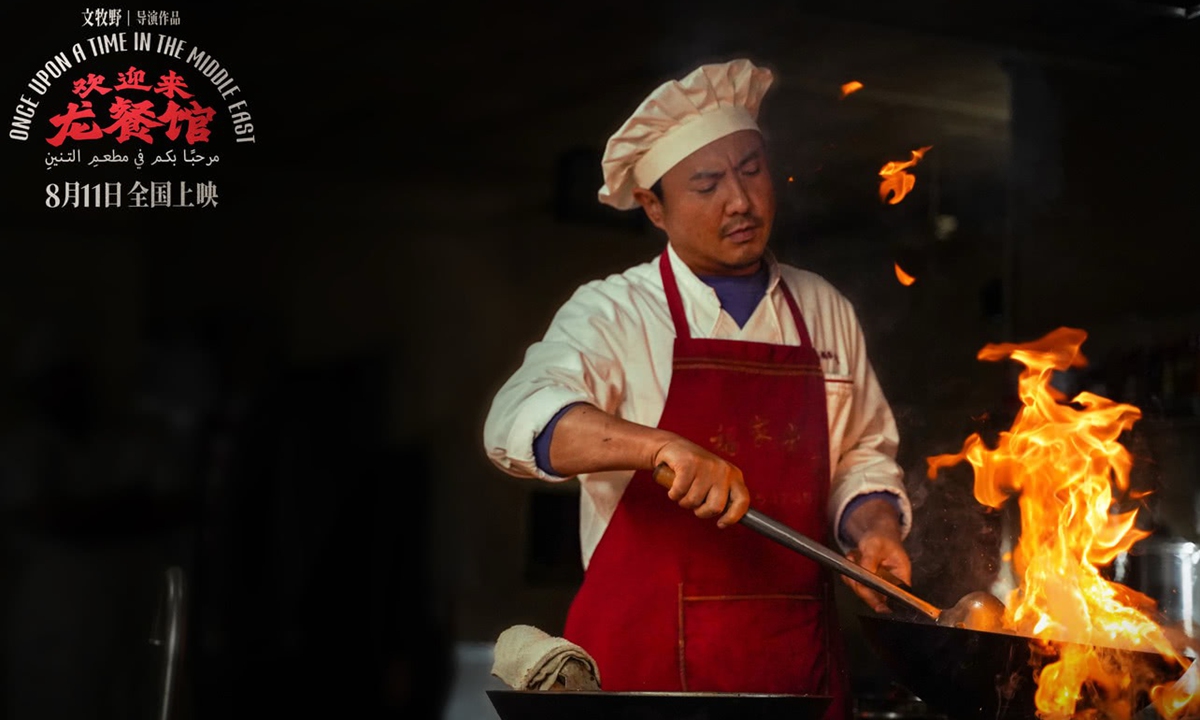
It centers on an ordinary Chinese chef caught in the crossfire of war. Shen Teng stars as Xu Fu, a cook who travels to the fictional Middle Eastern capital of Bahata to repay family debts. There he joins forces with restaurant manager Ma Junsheng (actor Jiang Qiming) to run a Chinese eatery. When conflict erupts, the self-preserving every-man endures personal losses and gradually comes to protect local children.
Produced by Ning Hao, the film continues Wen's signature focus on "little people," this time placing them far beyond China's borders.
In an interview with the Global Times, Wen talked about the project's connection to news reports of Chinese migrants who open restaurants overseas and forge quiet connections through food.
"Many Chinese people go abroad simply to make a living," he told the Global Times. "They open restaurants, use food to break down regional barriers, and form deep bonds with locals."
The production team conducted extensive research and location scouting in the Middle East to capture everyday details. Elements such as free-running single-humped camels required overseas shoots; the resulting images of open space after confinement, Wen noted, carry a simple sense of hope.
Food functions as the film's central motif.
"Food more often stands for happiness and peace," Wen explained. "Even in a war-torn environment, people still cannot do without three meals a day. That sounds basic, but after all the big things in life, what people care about most are the simplest things - eating a proper meal and taking care of family."
A specialized food unit developed the dishes, and Shen trained extensively so that most of the wok-tossing sequences were performed by the actor himself, Wen said.
The film deliberately intercuts kitchen routines with combat sequences.
"Three meals a day represent our longing for peaceful life, while war is the extreme act that destroys peaceful life on a large scale," Wen said. "When they collide, each becomes clearer: Food feels more ordered and full of happiness; war feels more chaotic and dark."
He hopes the juxtaposition helps audiences recognize how hard-won ordinary peace really is.
Xu Fu's decision to shelter orphans never relies on lofty rhetoric, only a meal and a roof. Wen described this approach as rooted in a human-centered outlook rather than classic Western hero narratives.
"We place more weight on humanism and the value of a person's existence. Our culture is about living well, studying well, eating well, and looking after children. No matter how large the events, three meals a day remain unavoidable. Food itself has warmth and can give people real strength when they are in a difficult situation," Wen said.
The director noted that he wants viewers to leave with the plainest conviction: live properly, eat properly, and cherish the peace that exists in the present.
On balancing personal expression with commercial reach, Wen kept his principle simple: "Make the film well and tell the story well. I try to put what I want to express into foreshadowing and details without hurting the viewing experience. If audiences notice those details, I will be glad. If they do not, it does not affect the normal narrative."
From Dying to Survive and Miracle: Stupid Kid to the new film, Wen's view of human complexity has remained consistent. "People have many different sides. They face different circumstances and make different choices."
The through-line, he added, is the same plain belief: "Being able to enjoy a proper meal is the greatest happiness."
Early audience response has been overwhelmingly positive. Advanced screenings delivered scores of 9.7-9.8 on major Chinese platforms including ticketing platform Maoyan.
Many entered expecting a light Shen Teng comedy and left in tears, describing the experience as "laughing then crying." Shen's restrained performance has drawn particular praise, with some calling it the strongest of his career. Jiang's supporting work has also been widely noted.
Moviegoers have frequently highlighted the film's refusal to deliver speeches. Its focus on daily meals and small acts of care lands more powerfully than any slogan.
On the depiction of the conflict, audiences observe that the movie offers a perspective that "flips the Hollywood script" by casting the US as the invader, while refusing to portray US soldiers as pure villains. Instead they appear as ordinary young men: loose in discipline and marked by the alienation of war.
Both Chinese and overseas viewers have singled out this measured approach as part of the film's distinctive Chinese viewpoint: It sidesteps both Western hero narratives and simple demonization. Some international comments note that by staying with ordinary lives rather than choosing geopolitical sides, the story offers a different lens on conflict.
One widely circulated comment from a popular Chinese self-media account on WeChat captured the film's ambition: "You can think of this film as a blend of Casablanca, Schindler's List, and The Shawshank Redemption, yet at its core lies the same grounded human compassion found in Dying to Survive. This is a highly successful attempt by Chinese filmmakers to surpass Hollywood. It is the first Chinese film that truly possesses a global vision and a professional sense of international storytelling. It is also a gift of warmth and goodwill from the Chinese people to a world still torn by war and cruelty."
。 8月23日,“寻根闽南·书香两岸”2026年海峡两岸(福建)书院文化交流活动在厦启动。两岸书院专家学者、青年代表130多人参加活动。 启动仪式上,首位获评国家级非物质文化遗产(南音)代表性传承人的台湾艺术家卓圣翔,携两岸艺术家带来精彩的《山居秋暝》南音表演。国家级非遗高甲戏代表性传承人、一级演员陈炳聪,演绎高甲戏《公子游》。 现场还正式发布“清新福建”书院研学旅行三条核心线路——“闽都文脉·茶海妈祖研学之旅”“海丝古邑·闽南风华研学之旅”“闽山寻理·朱子文脉溯源之旅”,串联八闽主要文脉地标,为两岸青年打造高品质研学精品线路。

B | 同时,“福建礼物”书院融合非遗工艺与书院文化,推出文化意蕴、实用功能兼具的镇纸、茶器、善罐等系列文创产品。 启动仪式后,两岸书院专家学者、书院代表围绕“两岸书院文化建设发展”“新时代闽台书院文化交流的路径与创新”“闽台书院传承活化与两岸文旅交流实践”等主题展开探讨,共话书院文化传承之道,共商闽南书院发展之策。 本次活动聚焦闽南文化主题,立足闽南书院文脉传承,六天时间里,两岸专家学者将深入厦门、漳州、泉州等地,感悟非遗在当代的活态传承,追溯两岸共享的精神家园。 海峡两岸(福建)书院文化交流活动已连续举办九届,是省文化和旅游厅重点打造的闽台文旅交流特色品牌。(厦门日报记者 邬秀君)。
Current article:http://byey8hg.runtunpaixufenjuduishuang.pics/2vxh/42x.html
Published on:11:19:27